

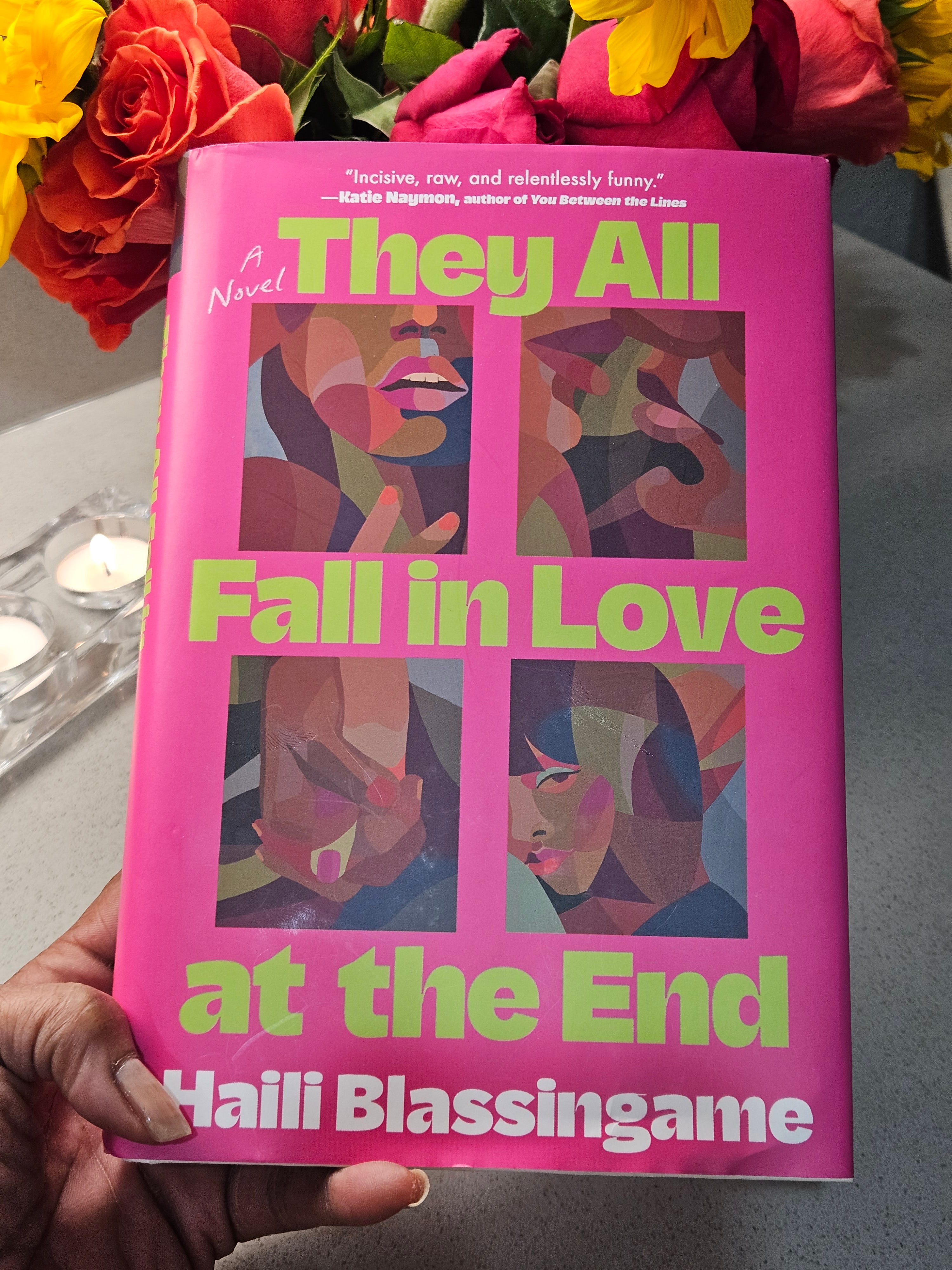

They All Fall in Love at the End arrives at a historical moment preoccupied with emotional survival. Haili Blassingame's debut is less concerned with whether love endures than with whether intimacy can exist in a culture saturated with uncertainty.
Although marketed as a romance, as one in the early stages of later adulthood, I read it as something else entirely: a cultural document that reveals what contemporary readers have been taught to fear, desire, and accept as inevitable.
A literary response to one of the defining anxieties of the twenty-first century: that meaningful connection is always threatened by instability. It addresses death, emotional withdrawal, fractured identities, and uncertain futures as emotional conditions, not plot devices.
This is not simply a story about romance. It is a story about living inside precarity, and that distinction matters.
Love becomes valuable precisely because permanence has become unimaginable. The emotional desire being answered is not merely “finding the right person.” Rather, this novel implies that intimacy remains possible even as the world feels increasingly disposable. Relationships become shelters against uncertainty rather than vehicles for transformation.
Yet those reassurances have cultural limitations when young people with fears, vulnerabilities, and emotional negotiations are expected to bend to the will of economic, political, domestic, and communal societies that exist mostly as atmosphere rather than as active forces shaping future possibilities.
In this way, structural pressures become individualized.
Capitalism appears as stress.
Racism appears as emotional residue.
Economic instability appears as personal anxiety.
Systems disappear behind feelings.
That invisibility is perhaps the novel’s most revealing ideological move.
The author’s ability to marginalize the collective structures that produce emotional crises while portraying institutions as largely abstract is a genius move. After all, communities exist only insofar as they support individual healing.
It is also a work that privileges personal authenticity over collective responsibility. This may appear insignificant; however, it reinforces the distinctly contemporary belief that emotional wellness is primarily an individual achievement.
This assumption reflects our historical moment: healing has been privatized, love is therapeutic, identity is the primary site of political struggle, and the broader systems that produce loneliness remain largely untouched.
What is assumed to be normal is equally revealing.
The novel normalizes emotional hyper-awareness. Cat St. Clair, the protagonist, constantly evaluates her feelings, communicates vulnerability, and negotiates (or renegotiates) relational boundaries. Fast, loose, easy, single… her transparency is admirably expected, despite her silence, emotional repression, and ambiguity being obvious signs of psychological deviation.
Likewise, instability itself becomes normalized. Wanton, debauched, and wildly whorish… Cats’ relationships unfold with the expectation that nothing lasts forever, because loss is an unexceptional default condition. Impermanence isn’t tragedy; it is reality. Consequently, hope becomes radical only because permanence has already been surrendered.
The social and political pressures beneath the novel are unmistakably contemporary.
This is fiction written after social media permanently altered intimacy, after COVID-19 transformed grief into a collective experience, after economic insecurity delayed the onset of adulthood, and after mental health entered the mainstream vocabulary.
These historical conditions shape every emotional interaction, whether explicitly acknowledged or not. Characters speak the language of trauma, boundaries, anxiety, validation, and emotional safety because contemporary culture increasingly interprets human experience through therapeutic discourse.
That discourse offers compassion.
The behaviors rewarded throughout the novel are vulnerability, honesty, emotional intelligence, and self-awareness. Characters who confront difficult emotions receive intimacy and understanding. Emotional avoidance, denial, or dishonesty is punished not by external consequences but by relational isolation.
To most people, this appears progressive on the surface. However, the author seems to pose an uncomfortable question: Is emotional fluency another form of moral superiority?
The novel occasionally suggests that psychological insight naturally produces ethical behavior. However, real life is less generous. Some of the most emotionally articulate people remain capable of profound harm. Immersive readers may question whether this complexity was purposely suggested and give it more attention.
Another tension emerges in the novel’s representation of identity.
Despite appearing multidimensional, Cat behaves symbolically. An embodiment of healing, grief, hope, fear, and redemption, she is more than contradictory. Her complexity often results in her living experiences being greater than the life she’s lived.
Emotionally authentic, Cat is on a journey of continuous self-examination. She rejects external expectations, but only through relentless internal labor. A never-ending quest, she is proof that liberation is possible, yet it requires perpetual emotional work and often comes at a high cost.
In short, Cat’s burden of freedom is psychological, and what is unique is that she appears genuinely surprised by the interior work required to sustain her cycle of external liberation. This aligns with and reflects contemporary logic, where personal transformation is the substitute for systemic change.
A celebration of emotional honesty as a form of resistance to isolation, it is about a single, educated woman who chooses vulnerability as an act of quiet rebellion. Although Cat’s rebellion remains carefully contained, her personal healing replaces collective transformation. The revolution never leaves the individual.
Perhaps the most revealing question is not what the novel shows, but what it prevents readers from seeing. It obscures how deeply structural conditions shape emotional life.
Readers are invited to believe that love can overcome uncertainty without interrogating why uncertainty has become so culturally dominant. Loneliness appears inevitable rather than historically produced. Anxiety appears universal rather than economically distributed. Emotional exhaustion becomes a personality rather than a political issue.
Is this a novel that quietly reinforces the very systems producing the suffering it seeks to comfort?
From my historical position, I belong to a generation whose understanding of intimacy was shaped before therapy became ubiquitous, before social media mediated relationships, and before transparent intimacy became a cultural expectation.
Historical distance allows me to recognize that what younger readers experience as natural often appears to me as culturally constructed. This distance matters because every generation mistakes its emotional vocabulary for universal truth.
As an Early Gen Xer, I find the cusp significant enough to realize that this novel’s strength lies in its ability to clearly expose the difference between (contemporary) love and power.
Power now operates less through explicit authority than through emotional management. Desire is organized around safety rather than risk. Fear is organized around abandonment rather than scarcity. And identity is the primary terrain upon which meaning is negotiated.
These shifts reveal a culture attempting to survive instability by making emotional intelligence its highest virtue. Whether that strategy ultimately produces liberation remains an open question.
A novel by an author with a clear understanding of how young women suffer, They All Fall in Love at the End succeeds not because it answers contemporary anxieties but because it faithfully reflects them. This generation is searching for permanence within impermanence, certainty within uncertainty, and love within systems that increasingly reward isolation.
For that reason alone, it deserves to be read not simply as a romance, but as an artifact of its cultural moment; it’s a novel that tells us as much about ourselves as it does about its characters.
Perhaps even more.

Similar “It Girl” titles:
Bunny, by Mona Awad
Lost Lambs, by Madeline Cash
Last Night in Brooklyn, by Xochitl Gonzalez

About the author:
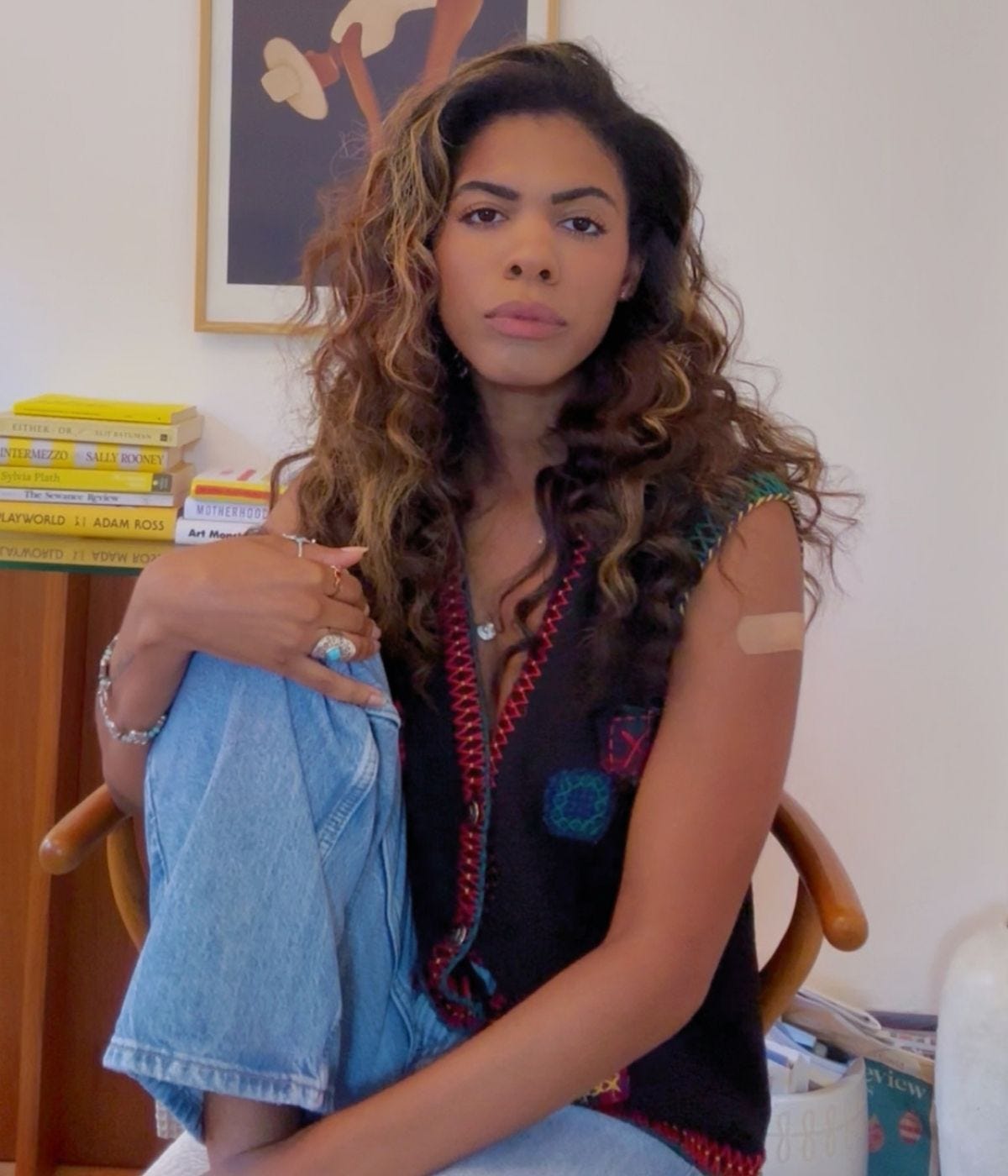
Author, essayist, (fellow) December Sagittarius, journalist, producer, and all-around “It Girl” Haili Blassingame writes about love, desire, and impossible decisions. A producer of NPR’s 1A, she is also the host of Touch Her and Die!, the newsletter, an avid book collector, and a resident of Washington, D.C.
Connect with Haili on Instagram, TikTok, the World Wide Web, and here:


Haili Blassingame - Thanks for the opportunity to review your work! Nicole Pyles - Thanks for including me in this round of WOW Reviews!
Wow Review, indeed!!! Your microscopic examination of Blassingame’s book left me with just one thing to do: buy it. “Is emotional fluency another form of moral superiority?” is one of two intriguing thoughts. The other: we may be blind to systems that cause loneliness.
Thank you for this uncovering. What a review!
Wonderful review! You broke it down. I agree that it is not about romance, but about everything else.